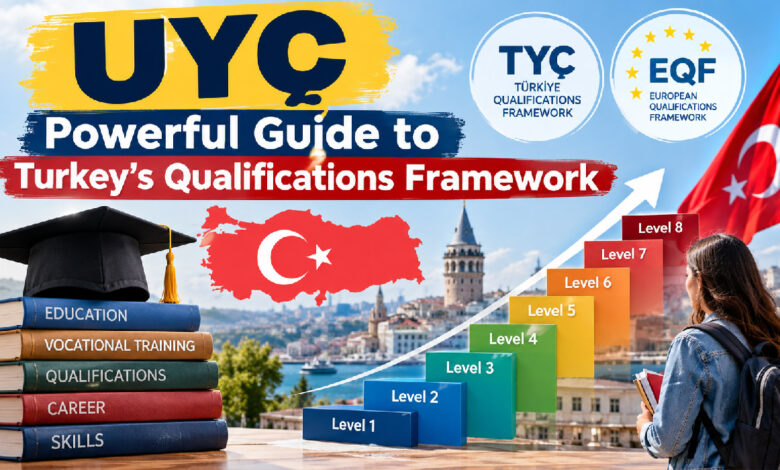
UYÇ is short for Ulusal Yeterlilik Çerçevesi, a Turkish term that means National Qualifications Framework. In general, a national qualifications framework is an organized system used to describe and compare different qualifications. It helps explain the level of knowledge, skills, and competence represented by a diploma, certificate, or other recognized qualification.
In Turkey, this idea is represented by the Türkiye Yeterlilikler Çerçevesi (TYÇ), or Türkiye Qualifications Framework. TYÇ provides a common structure for qualifications from different parts of education and training. Rather than looking only at the name of a diploma or certificate, the framework focuses on the learning outcomes connected with it.
This makes qualifications easier to understand. A student can see the general level represented by a qualification, while an employer can better understand the knowledge and abilities associated with it. The framework is therefore useful for education, employment, professional development, and comparison of qualifications.
Meaning and Purpose of UYÇ in Turkey
The basic purpose of UYÇ is to create a clear way of understanding qualifications. Education can include many different diplomas, certificates, vocational programs, and professional qualifications. Without a common framework, comparing these achievements can become difficult, particularly when their names and learning paths are different.
A qualifications framework solves part of this problem by focusing on learning outcomes. It asks what a person knows, what that person can do, and what level of responsibility or independence the person can demonstrate. This creates a more meaningful description than simply considering how long someone attended a particular course.
The system is useful to several groups at the same time. Learners can understand their educational progress, employers can interpret qualifications more clearly, and institutions can describe programs through common standards. It also supports communication between different areas of education instead of treating every qualification as an isolated achievement.
History and Development of UYÇ
Qualifications frameworks have become important because modern education is no longer limited to one simple route from school to university. People can learn through general education, vocational training, higher education, workplace development, and other pathways. A common structure helps connect these different forms of learning.
Turkey developed its national framework to make qualifications more transparent and easier to compare. The modern framework is known as the Türkiye Qualifications Framework (TYÇ). Its structure uses levels and learning outcomes so qualifications can be described through a consistent national approach rather than relying only on traditional qualification names.
Development of such a framework also supports Turkey’s connection with wider European qualification systems. Turkey has formally referenced its national framework to the European Qualifications Framework, and an updated Turkish referencing report is available through Europass. This provides a documented relationship between Turkey’s national levels and the wider European reference system.
UYÇ and the Türkiye Qualifications Framework (TYÇ)
UYÇ and TYÇ can appear confusing because both expressions concern national qualifications. UYÇ literally refers to the idea of an Ulusal Yeterlilik Çerçevesi, or national qualifications framework. TYÇ, meanwhile, is the specific name of Türkiye’s qualifications framework and is the term readers will commonly encounter in official Turkish qualification resources.
TYÇ provides an organized structure in which qualifications can be described according to levels and learning outcomes. These outcomes are expressed through knowledge, skills, and competence. The framework therefore gives users more information about the complexity and expectations of learning represented by a qualification.
For someone researching UYÇ, understanding TYÇ is therefore essential. UYÇ should not be treated as a separate diploma, university course, or professional certificate. The important concept is the national framework, while TYÇ provides the formal Turkish structure through which different types and levels of qualifications can be understood and compared.
How the UYÇ Qualification System Works
The framework works by connecting qualifications with defined levels. A qualification is not understood only through its title. Its expected learning outcomes are important because they describe the knowledge, skills, and competence that a learner is expected to demonstrate after successfully completing the relevant learning and assessment process.
Official TYÇ material explains that its level descriptors provide the basis for associating qualifications with levels. The descriptors are written in terms of knowledge, skill, and competence. This means the system looks beyond simple factors such as course names and provides a broader picture of the expected level of learning.
This approach makes comparison more consistent. Two qualifications can belong to different fields while still demonstrate learning at the same general framework level. However, being at the same level does not mean that the qualifications have identical content, purposes, or professional value. Their subjects and career applications may remain very different.
Learning Outcomes: Knowledge, Skills, and Competence
Learning outcomes are at the center of the TYÇ structure. They describe what learners are expected to know and be able to demonstrate. Official framework documentation organizes these outcomes into three main components: knowledge, skill, and competence. These components are used within the descriptors for the framework’s eight levels.
Knowledge concerns the information, concepts, theories, and understanding related to learning or work. Skills concern a person’s ability to use knowledge and perform tasks, solve problems, or apply methods. Competence goes further by considering how effectively knowledge and skills can be used with suitable responsibility and independence.
This outcome-based approach is important because time spent studying does not tell the whole story. Two programs of similar duration can produce different outcomes. By examining what learners have actually achieved, a framework can provide a clearer description of the expected complexity and responsibility associated with a particular qualification.
Understanding the Eight Qualification Levels
TYÇ consists of eight levels, with each level described through knowledge, skill, and competence. The levels represent increasing complexity of learning. Official framework documentation explains that Level 1 covers qualifications involving basic duties, while Level 8 reaches advanced learning and work involving innovation and solutions to new, complex problems.
The middle levels cover progressively more developed learning and responsibility. The official qualifications database shows familiar examples across this structure, including high-school and vocational qualifications, associate degrees, bachelor’s degrees, master’s degrees, and doctoral-level qualifications. For example, master’s qualifications appear at Level 7, while doctoral and certain specialist qualifications appear at Level 8.
A higher number therefore indicates more advanced learning outcomes, but levels should not be viewed as simple measures of personal worth or career success. Two qualifications at one level may belong to completely different fields. The level describes the complexity of expected learning rather than saying that their subject content is identical.
Types of Qualifications Covered by UYÇ and TYÇ
A national qualifications framework needs to accommodate more than university degrees. Turkey’s qualifications environment includes academic education, general education, vocational learning, and occupational qualifications. This broad approach makes it possible to describe different educational routes through a common language without pretending that every route serves the same purpose.
The official Türkiye Qualifications Database includes different document and qualification types. Examples visible across its levels include literacy-related qualifications, vocational qualification certificates, apprenticeship-related documents, high-school diplomas, associate degrees, bachelor’s degrees, master’s degrees, and doctoral or specialist qualifications.
However, appearing in a qualifications database should not automatically be interpreted as proof of final placement in TYÇ. The official TYÇ glossary/database information specifically warns that presenting a qualification in the database does not by itself mean that it has been placed in TYÇ. Readers should therefore check the specific qualification information carefully.
UYÇ vs TYÇ: What Is the Difference?
The easiest way to understand the terminology is to separate the general concept from Turkey’s named framework. UYÇ, meaning Ulusal Yeterlilik Çerçevesi, can be understood as the Turkish expression for a national qualifications framework. Similar national frameworks exist in many countries and are used to organize qualifications according to defined levels.
TYÇ, or Türkiye Yeterlilikler Çerçevesi, refers specifically to the Türkiye Qualifications Framework. It is the framework readers should examine when researching how Turkish qualifications are structured, how levels are described, and how Turkey’s qualification system relates to wider European reference mechanisms.
This distinction also prevents a common mistake: neither term should be understood as the name of a single certificate. A qualification can be a diploma, certificate, or other formally recognized document, while the framework provides the larger structure used to describe and compare qualifications. The official TYÇ definition of a qualification includes documents such as diplomas, certificates, and mastery certificates.
UYÇ, TYÇ, and the European Qualifications Framework (EQF)
The European Qualifications Framework (EQF) is a common European reference framework that makes national qualification levels easier to understand across countries. Like TYÇ, it contains eight levels. Countries can reference their national frameworks to the EQF to establish a transparent relationship between their national levels and the eight European levels.
Turkey has an EQF referencing report available through Europass. This connection matters because qualifications from different national systems can have unfamiliar titles. A common reference framework gives institutions, workers, students, and employers an additional way to understand the general level represented by qualifications from different systems.
The EQF does not replace national frameworks. Each country continues to manage its own education and qualifications system. Instead, the EQF acts as a translation tool between frameworks. This distinction is essential because a comparable framework level helps understanding, but it does not automatically make two qualifications identical or grant the same professional rights.
UYÇ in Higher and Vocational Education
Higher education is an important part of the qualifications system because university qualifications can be understood within the wider level structure. The Türkiye Qualifications Database shows bachelor’s, master’s, and doctoral qualifications within its level-based system. Master’s diplomas are associated with Level 7, while doctoral and specified advanced specialist qualifications are shown at Level 8.
Vocational learning is also important because many people develop professional competence outside a traditional university route. The official database includes vocational qualification certificates at several levels, along with documents such as apprenticeship and mastery qualifications. This makes the framework relevant to both academic and occupation-focused learning.
Bringing these pathways into a shared framework improves transparency while preserving their differences. An academic qualification and a vocational qualification can have different purposes even when they are considered at comparable levels of learning. The framework helps explain complexity and expected outcomes rather than turning every type of education into the same experience.
Benefits of UYÇ for Students, Employers, and Institutions
Students can use qualification levels to understand where an educational achievement sits within a wider structure. This can make future learning routes easier to understand and can help graduates describe the general level of their qualifications when communicating with employers or educational institutions.
Employers can benefit because a framework provides information beyond a qualification’s title. Looking at learning outcomes can help an employer understand the expected level of knowledge, skills, independence, and responsibility. However, employers still need to consider experience, occupation-specific abilities, and the requirements of the particular job.
Education and training institutions also gain a common reference language. Clearly described learning outcomes can make programs easier to explain and qualifications easier to compare. At a broader level, this transparency can support progression between learning routes and lifelong learning by helping people understand how different educational achievements relate within a national system.
International Recognition and Limitations of UYÇ
One of the most important limitations to understand is that framework alignment does not equal automatic international recognition. The EQF helps countries compare qualification levels, but recognition of academic or professional qualifications can involve separate rules and procedures. Europass distinguishes the EQF from systems governing professional and academic recognition.
This difference is especially important for regulated professions. A person may hold a high-level qualification but still need to meet legal or professional conditions before working in another country. Depending on the profession and jurisdiction, these conditions can involve recognition procedures, registration, language requirements, examinations, or other occupation-specific standards.
Framework levels also do not prove that two qualifications contain the same subjects. A Level 6 qualification in one field and another Level 6 qualification in a different field can represent comparable general learning complexity while developing very different expertise. Users should examine the actual qualification, learning outcomes, institution, and applicable recognition requirements.
Final Thoughts
UYÇ is best understood through the broader idea of a national qualifications framework, while Türkiye Yeterlilikler Çerçevesi (TYÇ) is the specific Turkish framework readers should know. Its purpose is to make qualifications more transparent by describing learning through clearly structured levels and expected outcomes.
TYÇ uses eight levels, and its descriptors are organized around knowledge, skill, and competence. This approach provides a common language for understanding qualifications from different educational and vocational routes. Turkey’s framework is also referenced to the European Qualifications Framework, improving the transparency of Turkish qualification levels in a wider European context.
The key point is that a framework explains the level of learning, not every detail about a qualification. It does not automatically provide international recognition, professional licensing, or job eligibility. Students and professionals should use TYÇ as a reference while also checking the specific rules that apply to their qualification, institution, profession, or destination country.
Frequently Asked Questions
What does UYÇ mean?
UYÇ stands for Ulusal Yeterlilik Çerçevesi, meaning National Qualifications Framework. It refers to a system for organizing and understanding qualifications according to learning levels, knowledge, skills, and competence.
What is the difference between UYÇ and TYÇ?
UYÇ refers to the general concept of a national qualifications framework, while TYÇ is the Türkiye Qualifications Framework used to organize and describe qualifications within Turkey through a common level-based structure.
How many qualification levels are there in TYÇ?
TYÇ has eight qualification levels. These levels describe increasing levels of knowledge, skills, competence, responsibility, and independence, ranging from basic learning outcomes to highly advanced academic and professional abilities.
Is TYÇ connected to the European Qualifications Framework?
Yes. Turkey’s qualifications framework is referenced to the European Qualifications Framework, or EQF. This relationship makes Turkish qualification levels easier to understand and compare with qualification frameworks used in European countries.
Does a UYÇ or TYÇ level guarantee international recognition?
No. A qualification framework level helps explain and compare the level of learning, but it does not automatically guarantee international recognition, professional licensing, university admission, or permission to work in another country.