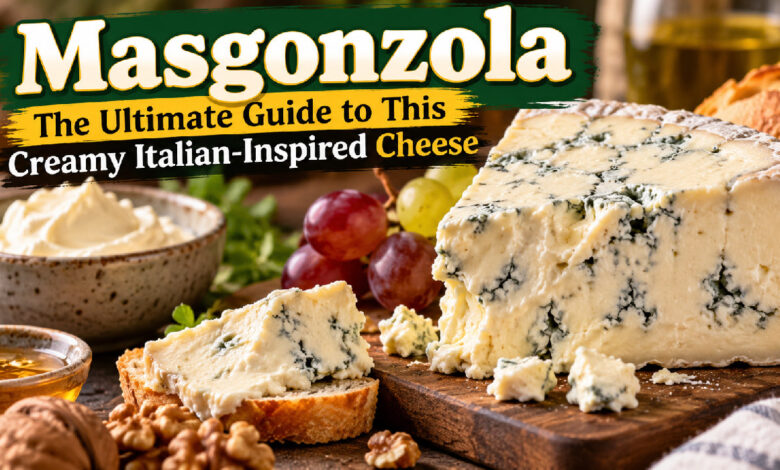
Masgonzola is a name that sounds like a traditional Italian cheese, but its meaning is a little different. The term is generally used for a creamy combination of Gorgonzola and mascarpone. It brings together the bold character of blue cheese with the smooth richness of mascarpone.
This combination has attracted attention because the name can easily create confusion. Someone seeing Masgonzola for the first time may think it is a separate cheese variety with its own history, production region, and traditional recipe. In practice, it is better understood as a Gorgonzola-and-mascarpone preparation.
This guide explains Masgonzola in simple detail, including what it is, where its name comes from, how it is prepared, and what it tastes like. It also covers its ingredients, nutrition, culinary uses, storage, buying tips, and differences from Gorgonzola and mascarpone.
What Is Masgonzola?
Masgonzola is generally a soft and creamy dairy preparation that combines Gorgonzola with mascarpone. Gorgonzola provides the recognizable blue-cheese taste, while mascarpone adds a mild, rich, and smooth quality. Together, they create a balanced cheese combination that is usually less intense than Gorgonzola alone.
The two cheeses can be combined in different ways. Some preparations mix them until they form a smooth spread, while others keep them in separate visible layers. The exact balance can also change, meaning one Masgonzola-style product may taste stronger or creamier than another.
It is important to understand that Masgonzola does not describe one universally standardized cheese. The term is more useful as a convenient name for the combination of mascarpone and Gorgonzola. Similar products may therefore appear under different names depending on the producer, retailer, or country.
Is Masgonzola a Real Cheese?
Masgonzola is real in the sense that the food combination behind the name exists. Gorgonzola and mascarpone are commonly paired, and commercial cheese products combining the two can be found. The confusion begins when Masgonzola is presented as an independent historic cheese variety.
Unlike traditional cheeses with clearly established production standards, Masgonzola does not have one universal recipe. Different producers can change the amount of Gorgonzola and mascarpone, create layers instead of mixing them, or market the combination using another product name.
For this reason, calling Masgonzola completely fake would be misleading. A more accurate description is that it is an informal or commercial name associated with a genuine cheese combination. The food itself can certainly be real, even though Masgonzola is not generally recognized as a separate traditional cheese category.
Where Does the Name Masgonzola Come From?
The name Masgonzola appears to come from joining parts of the words mascarpone and Gorgonzola. The beginning, “Mas,” points toward mascarpone, while “gonzola” comes from Gorgonzola. This creates a short name that immediately connects the two dairy products.
This type of naming is often called a portmanteau, where parts of two words are combined to form another word. It makes sense in this case because the name describes the two most important components without requiring the longer phrase “Gorgonzola and mascarpone.”
The clever name is also one reason for the confusion surrounding Masgonzola. It sounds similar to established Italian cheese names, so people may assume it refers to a particular place or centuries-old cheesemaking tradition. Understanding the word formation makes the meaning much easier to recognize.
Is Masgonzola an Official Italian Cheese?
Masgonzola should not be confused with an officially protected Italian cheese designation. Gorgonzola has Protected Designation of Origin status in Europe, often shown as PDO in English or DOP in Italian. This protection connects genuine Gorgonzola with specific production requirements and approved geographical areas.
Masgonzola does not have the same separate protected identity. Although it is based on two foods strongly associated with Italian cuisine, combining them does not automatically create another officially recognized cheese variety. The distinction is important when discussing its origin and history.
A product can still be delicious and commercially available without having protected status. The safest way to describe Masgonzola is therefore as a Gorgonzola-and-mascarpone specialty or preparation. This avoids suggesting that Masgonzola has the same regulatory identity, production rules, or geographical protection as Gorgonzola.
What Is Masgonzola Made Of?
The two main components of Masgonzola are Gorgonzola and mascarpone. Gorgonzola is a blue-veined cow’s milk cheese known for its salty, tangy, savory, and sometimes strong flavor. Its blue-green veins help give the cheese its recognizable appearance and distinctive character.
Mascarpone is very different. It is a soft, rich dairy product with a smooth consistency and mild flavor. Instead of adding another strong taste, mascarpone makes the combination creamier and reduces some of the sharpness associated with blue cheese. This creates a softer overall experience.
The proportion of these ingredients is not fixed. A preparation containing more mascarpone will usually be milder, smoother, and richer. Increasing the amount of Gorgonzola creates a saltier and more noticeable blue-cheese flavor. Commercial products may also contain other permitted ingredients, so individual labels should always be checked.
How Is Masgonzola Made?
There is no single official process for making Masgonzola because it is not governed by a universal Masgonzola production standard. Generally, the process involves bringing prepared Gorgonzola and mascarpone together rather than producing an entirely new cheese from milk under a separate cheesemaking method.
One approach is blending. The Gorgonzola can be softened and carefully combined with mascarpone until the mixture reaches a creamy consistency. Some blue pieces may remain visible, or the mixture can be made smoother depending on the desired texture and appearance.
Another approach is layering the cheeses. Layers of creamy mascarpone can alternate with layers of Gorgonzola, producing a noticeable contrast when the product is sliced. The proportions and techniques can differ between producers. This flexibility explains why Masgonzola-style products do not always look or taste exactly the same.
What Does Masgonzola Taste Like?
Masgonzola usually combines creamy richness with the salty and tangy character of blue cheese. Mascarpone reaches the palate with a mild, buttery quality, while Gorgonzola provides deeper savory notes. The result can feel rich without being as aggressive as some stronger blue cheeses.
Its intensity depends heavily on the ratio between the two ingredients. A mascarpone-heavy preparation can have only a gentle blue-cheese finish. A version containing more Gorgonzola may have stronger saltiness, tanginess, aroma, and earthy notes while remaining creamier than plain Gorgonzola.
This balance can make Masgonzola appealing to people who find strong blue cheese difficult to enjoy. The mascarpone does not completely hide the Gorgonzola. Instead, it softens its intensity and changes the mouthfeel, creating a combination in which creamy and savory flavors can complement each other.
Masgonzola Texture, Aroma, and Appearance
Texture is one of Masgonzola’s most noticeable characteristics. Mascarpone gives the preparation a soft, dense, and creamy consistency, while the exact Gorgonzola used can add slightly firmer sections. Many versions are easy to spread and become even softer as they approach serving temperature.
Its appearance depends on whether the cheeses are blended or layered. A layered product can show bright cream-colored mascarpone next to blue-veined Gorgonzola. A blended version may have a more uniform pale color with small blue or green pieces distributed through the mixture.
The aroma is also affected by the proportions. Mascarpone has a relatively gentle dairy smell, whereas Gorgonzola contributes the more recognizable blue-cheese aroma. A mild preparation may smell only lightly earthy and tangy, while a Gorgonzola-heavy version can have a noticeably stronger and more complex scent.
Masgonzola vs Gorgonzola: What Is the Difference?
Gorgonzola and Masgonzola are closely connected, but the names do not mean the same thing. Gorgonzola is an established blue cheese with protected status and defined production requirements. Masgonzola generally describes a preparation in which Gorgonzola is combined with creamy mascarpone.
The difference is particularly noticeable in flavor and texture. Gorgonzola can provide a stronger blue-cheese taste and more noticeable aroma. Adding mascarpone softens those characteristics while increasing creaminess. As a result, Masgonzola is normally smoother, richer, and milder than eating the same Gorgonzola by itself.
Their culinary uses can overlap, but they behave differently. Gorgonzola can be crumbled, sliced, melted, or served on a cheese board depending on its variety. Masgonzola’s softer consistency makes it especially convenient for spreading and creamy sauces. Most importantly, Masgonzola does not share Gorgonzola’s separate PDO identity.
Masgonzola vs Mascarpone
Mascarpone is one component of Masgonzola rather than another name for it. On its own, mascarpone has a very mild dairy flavor and a thick, creamy texture. It is widely associated with rich preparations where smoothness is more important than a sharp or salty cheese taste.
Masgonzola changes that character by adding Gorgonzola. The blue cheese contributes saltiness, tanginess, aroma, and savory depth that plain mascarpone does not provide. This moves the combination strongly toward savory cooking, although its creamy character still pairs effectively with naturally sweet ingredients.
Texture is another important difference. Mascarpone is consistently smooth and soft, whereas Masgonzola can contain pieces or layers of Gorgonzola. Therefore, someone looking for neutral creaminess may prefer mascarpone, while someone wanting creaminess combined with noticeable blue-cheese flavor may find Masgonzola more suitable.
Different Types of Masgonzola-Style Products
Because Masgonzola has no universal recipe, products can vary considerably. One of the clearest differences is between blended and layered styles. Blended versions combine both cheeses throughout the product, helping each serving provide a relatively consistent mixture of creamy and blue-cheese flavors.
Layered versions keep the ingredients more visually distinct. A slice may contain separate bands of pale mascarpone and blue-veined Gorgonzola. This presentation can be attractive on cheese boards because people can clearly see the contrast between the two components before tasting them together.
Strength is another useful way to distinguish products. Mascarpone-heavy preparations are generally mild and very creamy, while Gorgonzola-heavy versions offer greater blue-cheese intensity. Homemade versions provide even more control. These differences are better viewed as preparation styles rather than official Masgonzola varieties with standardized names or production rules.
How Is Masgonzola Used in Cooking?
Masgonzola works particularly well in dishes that benefit from a creamy texture and savory cheese flavor. It can be gently melted into pasta or gnocchi, where mascarpone helps create a rich coating while Gorgonzola provides enough flavor to keep the sauce from tasting plain.
It can also be stirred into risotto near the end of cooking, spread over crostini, or added in small amounts to pizza and flatbread. Because the cheese is rich, large quantities are usually unnecessary. A modest amount can add both creaminess and a recognizable blue-cheese character.
For simple appetizers, Masgonzola can be spread on toasted bread and combined with fruit, nuts, or a small amount of honey. It can also accompany roasted vegetables or form part of a cheese board. Its flexibility comes from balancing two qualities that are useful in cooking: strong savory flavor and smooth creaminess.
What Foods Pair Well With Masgonzola?
Sweet fruits are natural partners for Masgonzola because sweetness can balance the salty and tangy notes of Gorgonzola. Pears, figs, grapes, and apples can work particularly well. Their freshness also provides contrast against the dense and creamy texture of the cheese combination.
Nuts add another useful contrast. Walnuts and almonds provide crunch and earthy flavors without hiding the cheese. Bread, crostini, and plain crackers offer neutral bases that allow the mascarpone and Gorgonzola flavors to remain noticeable. A small drizzle of honey can introduce additional sweetness.
Masgonzola can also pair with savory foods such as pasta, gnocchi, risotto, mushrooms, and roasted vegetables. The best pairings usually provide contrast rather than adding another extremely rich ingredient. Balancing creaminess with freshness, sweetness, acidity, or crunch can make the overall dish feel more complete.
Masgonzola Nutrition and Calories
There is no single nutrition profile that applies to every Masgonzola-style product. Nutritional values depend on the proportions of mascarpone and Gorgonzola, the specific brands used, serving size, and any additional ingredients. For accurate numbers, the nutrition label on the individual product is the best source.
Both main ingredients can contribute significant amounts of fat and calories. Gorgonzola also provides protein and calcium, while its salt content means Masgonzola preparations may contain a noticeable amount of sodium. Mascarpone contributes much of the rich texture and can increase the overall fat and energy content.
This does not mean Masgonzola must be avoided. Serving size is more useful to consider than labeling one food simply healthy or unhealthy. Since its flavor and texture are concentrated, a relatively small portion may be enough for pasta, toast, or a cheese board. Individual nutrition labels remain important.
Is Masgonzola Healthy?
Masgonzola can provide useful nutrients, but it is best viewed as a rich food rather than a special health product. Dairy ingredients can supply protein and calcium, both of which have important nutritional roles. The exact amounts, however, depend on the particular cheeses and proportions used.
The other side of the nutritional picture includes fat, saturated fat, calories, and sodium. Mascarpone is particularly rich, while blue cheese can contribute substantial salt. People who need to limit saturated fat, sodium, or overall energy intake should consider serving size and follow any dietary guidance provided by their healthcare professional.
Balance is therefore the most practical approach. Masgonzola can be enjoyed as part of a varied diet without making exaggerated claims about health benefits. Pairing a modest serving with vegetables, fruit, or other less energy-dense foods can also create a more balanced meal or snack.
Allergens and Dietary Considerations
A standard Masgonzola preparation contains dairy because both Gorgonzola and mascarpone are milk-based foods. People with a diagnosed milk allergy should not assume that a creamy cheese blend is safe. Product labels should be checked carefully for milk and any additional allergens or cross-contact warnings.
Vegetarian suitability can also vary. Some cheeses use animal-derived rennet, while others use microbial or alternative enzymes. Anyone following a strict vegetarian diet should check the manufacturer’s ingredient information instead of assuming that every Masgonzola-style product meets the same dietary requirements.
Pasteurization and lactose may also matter to some consumers. Ingredients and production methods can differ between products, so general claims cannot replace the information printed on the package. People with specific medical, pregnancy-related, allergy, or intolerance concerns should follow appropriate professional guidance and choose products that meet their individual requirements.
How to Buy Masgonzola
Finding Masgonzola may require looking beyond the exact word itself. A retailer may sell the same general combination under names such as “Gorgonzola e Mascarpone,” “Gorgonzola with Mascarpone,” or another descriptive product name. Specialty cheese shops and Italian food sections are logical places to look.
Read the package rather than relying only on the product name. Check whether Gorgonzola and mascarpone are clearly listed, and examine their proportions when available. If protected Gorgonzola is important to you, look for appropriate PDO or DOP information rather than assuming it from the word Masgonzola.
The use-by date and refrigeration instructions also deserve attention because this is a soft dairy preparation. Choose packaging that is intact and properly refrigerated. Different ratios produce different experiences, so people seeking a mild product may prefer more mascarpone, while blue-cheese fans may enjoy a Gorgonzola-forward preparation.
How to Store Masgonzola Properly
Masgonzola should generally be kept refrigerated because it contains soft dairy ingredients. The manufacturer’s storage directions should always take priority because recipes, packaging systems, and shelf lives differ. Keep an unopened product at the temperature stated on its label and avoid leaving it unrefrigerated unnecessarily.
After opening, protect the cheese from contamination and excessive drying. Depending on the packaging, this may mean closing the original container securely or transferring the product to a suitable covered food container. Use clean utensils when serving it to reduce the chance of introducing unwanted bacteria.
There is no universal rule saying every Masgonzola product remains fresh for the same number of days after opening. Follow the package instructions and use-by guidance. Freezing may also change the smooth texture of mascarpone-based preparations, potentially causing separation or graininess after thawing, so refrigeration is generally preferable.
Can You Make Masgonzola at Home?
A simple Masgonzola-style preparation can be made at home by combining mascarpone with Gorgonzola. There is no need for a complicated cheesemaking process because both components are already finished dairy products. The main decision is how strong you want the final mixture to taste.
For a mild result, begin with a larger amount of mascarpone and gradually add small pieces of Gorgonzola. Someone who enjoys stronger blue cheese can increase the Gorgonzola proportion. The cheeses can be mixed completely for a smoother spread or folded gently to leave visible pieces and contrasting textures.
Layering is another option. Mascarpone and softened Gorgonzola can be arranged separately so that both appear in each serving. Since there is no universally established Masgonzola ratio, home cooks can adjust the balance according to personal preference rather than trying to reproduce one supposedly authentic formula.
Why Is Masgonzola Becoming a Popular Search Term?
Masgonzola attracts curiosity mainly because its name sounds convincing. Someone familiar with Italian cheeses may recognize the “gonzola” ending and wonder whether Masgonzola is another traditional variety. That uncertainty naturally creates questions about its meaning, ingredients, origin, and relationship with Gorgonzola.
Online content can increase this confusion. Once an unusual term appears across food articles, recipes, menus, or search results, readers may begin treating it as an established category. Different descriptions can then make it difficult to separate a genuine food preparation from unsupported stories about its supposed history.
The most useful explanation avoids both extremes. Masgonzola should not automatically be presented as an ancient independent cheese, but it should not simply be dismissed as meaningless either. The combination of Gorgonzola and mascarpone is genuine. Understanding that distinction answers the main question behind much of the search interest.
Final Thoughts
Masgonzola is much easier to understand when its two components are considered separately. Gorgonzola supplies the tangy, salty, earthy character of blue cheese, while mascarpone provides smoothness, richness, and a mild dairy flavor. Combining them produces a softer and creamier way to enjoy Gorgonzola.
The important point is that Masgonzola is best understood as an informal or product-style name for a Gorgonzola-and-mascarpone preparation. It should not be confused with Gorgonzola itself, which has an established identity and PDO protection. Masgonzola does not have an equivalent separate protected designation.
For everyday cooking, the lack of a universal formula creates flexibility. Masgonzola can be blended, layered, made mild or given a stronger blue-cheese character. It can work with pasta, risotto, toast, fruit, nuts, vegetables, and cheese boards, making this simple two-cheese combination surprisingly versatile.
Frequently Asked Questions
What is Masgonzola?
Masgonzola is generally a creamy combination of Gorgonzola and mascarpone. Gorgonzola adds a salty, tangy blue-cheese flavor, while mascarpone makes the mixture smoother, richer, and milder.
Is Masgonzola a real Italian cheese?
The Gorgonzola-and-mascarpone combination is real, but Masgonzola is not generally recognized as a separate protected Italian cheese. It is better understood as an informal name for this two-cheese preparation.
What does Masgonzola taste like?
Masgonzola usually tastes creamy, buttery, slightly salty, and tangy. Mascarpone softens the stronger flavor of Gorgonzola, creating a milder blue-cheese taste with a smooth and rich texture.
What is the difference between Masgonzola and Gorgonzola?
Gorgonzola is a PDO-protected Italian blue cheese. Masgonzola generally combines Gorgonzola with mascarpone, making it softer and creamier. Masgonzola does not have the same separate protected status as Gorgonzola.
What can Masgonzola be used for?
Masgonzola can be used in pasta, gnocchi, risotto, sauces, pizza, crostini, and cheese boards. Its creamy texture also pairs well with pears, figs, grapes, walnuts, bread, and honey.