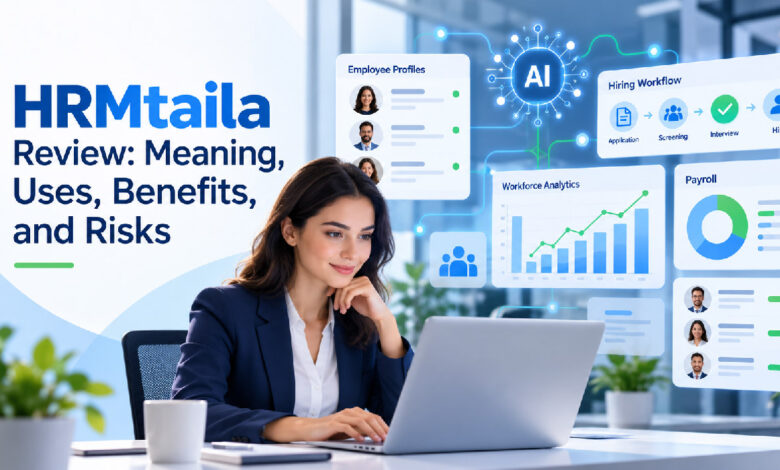
Hrmtaila is an emerging online term connected with artificial intelligence and human resource management. It is mostly used to describe how modern HR teams can use AI, automation, cloud tools, and workforce data to manage employee-related work in a better way.
Human resource teams handle many daily tasks, including hiring, onboarding, payroll, employee records, training, performance, and staff support. These tasks can become slow when everything is done manually, especially in growing companies with many workers.
The idea behind Hrmtaila is simple. It explains how technology can reduce repeated work and help HR teams focus more on people. However, it should be understood as a concept, not as a confirmed software platform.
What Is Hrmtaila?
Hrmtaila can be understood as a developing concept for AI-powered human resource management. It connects artificial intelligence, HR automation, workforce analytics, cloud HR software, and digital employee support into one wider idea.
In simple words, Hrmtaila means using smart technology to make HR tasks easier, faster, and more organized. It may include tools that help with recruitment, onboarding, employee records, payroll, reports, training, and performance tracking.
The term is not yet officially defined by a known company or HR organization. For this reason, it is safer to explain Hrmtaila as an emerging online term related to modern AI in HR.
Is Hrmtaila a Real Software Platform?
At this time, Hrmtaila should not be treated as a confirmed software platform. There is no clear public evidence of an official Hrmtaila company, founder, mobile app, pricing page, customer list, or verified product website.
Some online articles may describe Hrmtaila as a tool or platform, but repeated online claims do not always prove something is official. A real software product usually has company details, product pages, support documents, and security information.
For now, Hrmtaila is better understood as a keyword or concept linked with AI-based HR management. This careful explanation helps readers avoid confusion and gives the article more trust.
Why Hrmtaila Is Becoming Important in Modern HR
Hrmtaila is becoming important because HR departments now manage more work and more data than before. Companies need to hire good people, support employees, manage salaries, track performance, and plan future workforce needs.
Manual HR work can take a lot of time. When teams copy the same data into different systems or answer the same questions again and again, productivity becomes lower and mistakes can happen more easily.
AI and automation can help reduce this pressure. Hrmtaila represents the idea of using digital systems to manage routine HR work while giving HR staff more time for communication and decision-making.
How Hrmtaila Relates to AI in Human Resource Management
Hrmtaila is closely related to AI in human resource management because AI can process large amounts of information quickly. It can help HR teams organize data, find patterns, and complete simple tasks faster than manual methods.
For example, AI can help sort job applications, answer common employee questions, prepare reports, and show workforce trends. These features can make HR work more structured and useful for managers.
Still, AI should not replace human judgment. HR decisions can affect someone’s career, income, and workplace experience. Hrmtaila works best when technology supports people instead of making every decision alone.
Hrmtaila in Recruitment and Hiring
Recruitment is one of the main areas where the Hrmtaila idea can be useful. Large companies may receive hundreds of applications for one job, and checking each CV by hand can take a long time.
AI tools can help organize applications, match skills with job needs, schedule interviews, and send basic candidate updates. This can make the first stage of hiring faster and easier for recruiters.
However, final hiring decisions should still involve people. A system may miss important experience or misunderstand a candidate’s background. Human review helps make hiring more fair and responsible.
Hrmtaila in Employee Onboarding
Employee onboarding begins when a new worker joins a company. The person may need to complete forms, read policies, create accounts, attend training, and understand how the company works.
The Hrmtaila approach can support onboarding through automation. A digital system can send reminders, track tasks, share documents, and guide new employees through each step in a clear order.
AI assistants can also answer simple onboarding questions. Still, new employees should always have access to a real HR person because some questions need personal guidance and human support.
Hrmtaila and Employee Support
HR teams often receive the same questions from employees many times. Workers may ask about leave, pay dates, benefits, company forms, training links, or workplace policies.
AI chatbots and virtual HR assistants can help answer basic questions quickly. This can save time for HR staff and help employees get simple information without waiting for an email reply.
However, not every employee issue should be handled by AI. Complaints, conflicts, salary problems, private matters, and sensitive workplace concerns should be managed by trained HR professionals.
Hrmtaila and Workforce Analytics
Workforce analytics means studying employee data to understand what is happening inside a company. This data may include attendance, turnover, hiring time, training progress, skills, labor costs, and performance trends.
Hrmtaila connects with workforce analytics because AI can help find patterns faster. For example, a system may show that one department has high turnover or that employees need training in a certain skill.
These insights can help managers make better plans. Still, data does not always explain the full reason behind a problem, so human review is needed before taking action.
Hrmtaila in Payroll and Employee Records
Payroll and employee records are important because they include sensitive and accurate information. HR teams manage attendance, leave, overtime, salary details, tax data, personal records, and employment documents.
Automation can help connect attendance, leave, and payroll systems. This reduces repeated data entry and can flag unusual information before payroll is completed.
Even with automation, payroll should be checked carefully. A small mistake can affect an employee’s salary and trust, so human review remains important in this area.
Hrmtaila and Performance Management
Performance management includes employee goals, manager feedback, work results, training needs, and review discussions. Hrmtaila can help organize this information in one place.
AI may help managers see progress, notice patterns, and identify areas where an employee may need support. This can make performance reviews more informed and less dependent on memory alone.
However, performance cannot always be judged through data. Some work is hard to measure, and personal or team situations may affect results. Human judgment should stay central.
Main Benefits of Hrmtaila
The main benefit of Hrmtaila is saving time. Automation can handle repeated tasks such as reminders, reports, document tracking, employee questions, and basic workflow updates.
Another benefit is consistency. A digital HR system can follow the same process for hiring, onboarding, leave, payroll, and reporting. This makes work easier to manage and track.
Hrmtaila can also support better planning. Workforce data can show hiring needs, training gaps, turnover patterns, and employee support issues before they become bigger problems.
Risks and Limitations of Hrmtaila
Hrmtaila also has limits because AI systems are not perfect. They can misunderstand information, give incorrect answers, or make weak suggestions if the data is poor.
Another risk is overdependence on automation. A company may trust software too much and forget that HR decisions often need context, fairness, and direct communication.
AI can also miss human emotions and special situations. Employees are not only data points, so important matters should always include human review and careful judgment.
Data Privacy, Security, and Bias Concerns
HR data is very sensitive. It can include salaries, addresses, attendance, job applications, performance records, leave history, and personal documents.
Companies using AI in HR must protect this information carefully. Access should be limited, records should be secure, and employees should know how their data may be used.
Bias is also a serious concern. AI can repeat unfair patterns if its data is weak or biased. Hiring, pay, promotion, and performance decisions need regular human checking.
How Businesses Can Use Hrmtaila Responsibly
Businesses should start with a clear HR problem before using AI. They should not add automation only because it sounds modern or popular.
A company can begin with one simple task, such as interview scheduling, onboarding reminders, employee FAQs, or basic reporting. This makes it easier to test whether the tool is useful.
HR teams should also create rules for human review. Important decisions about hiring, salary, promotion, discipline, and termination should never depend only on automated results.
Can Small Businesses Use the Hrmtaila Approach?
Small businesses can use the Hrmtaila approach without needing a large HR system. They can start with simple tools that save time and reduce repeated work.
For example, a small business may automate interview reminders, new employee forms, leave requests, document storage, or simple staff questions. These small changes can improve daily HR work.
The key is to keep things simple. Small businesses should choose tools that solve real problems, protect employee data, and remain easy for staff to understand.
Future of Hrmtaila and AI in HR
The future of Hrmtaila is connected with the wider future of AI in human resource management. More companies may use AI agents, cloud HR systems, analytics tools, and employee self-service platforms.
These systems may support recruitment, onboarding, training, payroll, performance tracking, employee support, and workforce planning. HR teams may become faster and more data-focused.
Still, the future should not remove human responsibility. HR work needs fairness, empathy, privacy, and communication. The best systems will combine useful technology with human judgment.
Conclusion
Hrmtaila is best understood as an emerging term linked with AI-driven human resource management. It explains how AI, automation, cloud software, and workforce analytics can support modern HR tasks.
It can relate to recruitment, onboarding, employee support, payroll, records, performance management, and workforce planning. However, it should not be presented as a confirmed software platform without verified proof.
The real value of Hrmtaila is balance. AI can save time and organize data, but businesses must protect privacy, reduce bias, check results, and keep humans responsible for important HR decisions.
(FAQs)
What is Hrmtaila?
Hrmtaila is an emerging online term linked with AI-powered human resource management. It explains how artificial intelligence, automation, cloud HR software, and workforce analytics can help HR teams manage hiring, onboarding, payroll, employee records, and staff support more efficiently.
Is Hrmtaila a real software platform?
Hrmtaila is not currently confirmed as a real software platform. There is no verified company, founder, official website, app, pricing plan, or customer list available. It is better understood as a developing concept related to AI in HR.
How can Hrmtaila help HR teams?
Hrmtaila can help HR teams by reducing repeated manual work. It can support recruitment, onboarding reminders, employee questions, payroll data, records, reports, and workforce analytics. This gives HR staff more time for people-focused tasks and important decisions.
Can Hrmtaila replace HR employees?
No, Hrmtaila cannot replace HR employees. AI can help with simple and repeated tasks, but human judgment is still needed for hiring, pay decisions, performance reviews, workplace problems, privacy issues, and employee support.
What are the main risks of Hrmtaila?
The main risks of Hrmtaila include wrong AI answers, poor data quality, privacy problems, security concerns, bias in hiring or reviews, and too much dependence on automation. Businesses should use human review and clear rules when applying AI in HR.