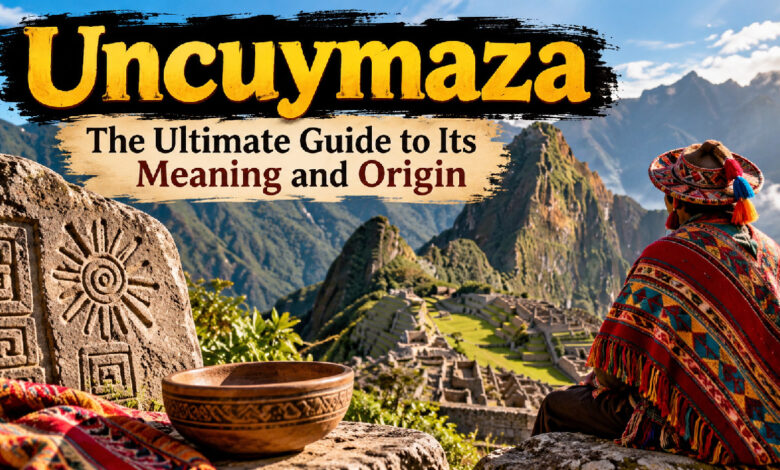
Uncuymaza is an unusual term that has gained attention online because people encounter very different explanations of what it means. Unlike a common dictionary word, uncuymaza does not currently have one widely established definition that can be applied confidently in every context. Some online material treats the term as the name of a digital publishing website, while other pages associate it with culture, creativity, nature, philosophy, art, travel, or technology. These different descriptions make the keyword interesting, but they also create confusion for readers who simply want a clear answer.
The most useful way to understand uncuymaza is to separate identifiable modern usage from claims that require additional evidence. The name has been associated with online publishing and general-interest content, which represents a practical modern use of the term. Broader descriptions sometimes connect uncuymaza with Andean culture, Quechua language, Indigenous traditions, a hidden location in Peru, artistic ideas, or ancient philosophy. These interpretations should not automatically be presented as established historical facts because the available information does not provide one authoritative origin connecting all these different meanings.
Context is therefore essential when someone encounters uncuymaza. If the word appears as the name of a website or online publication, it can simply function as a distinctive digital brand. If a writer uses it while discussing art, balance, nature, or community, the term may have a symbolic or creative meaning within that particular article. Readers should avoid assuming that every use of uncuymaza refers to the same concept. Understanding where the word appears, who is using it, and what evidence supports the explanation provides a much more reliable interpretation.
What Does Uncuymaza Mean?
There is no conclusively established universal meaning of uncuymaza. Different online sources have assigned very different meanings to the word, ranging from a cultural concept to a digital publishing identity. Some descriptions associate it with balance, creativity, cooperation, community, nature, and personal connection. Other material presents it as a place, artistic approach, philosophy, website, or technology-related name. Because these explanations do not consistently point to one source, they should be understood as separate interpretations rather than parts of one proven definition.
This distinction matters because an interpretation is different from an established translation. For example, a writer can use uncuymaza symbolically to represent harmony with nature without proving that the word literally translates to “harmony with nature” in a traditional language. The same principle applies to descriptions involving community, balance, spirituality, or creativity. Such themes can become associated with a modern term through repeated online use, but repetition alone does not establish an ancient linguistic definition or historical meaning.
The safest definition is therefore contextual. Uncuymaza is an uncommon term used online in several different ways, with its precise original meaning remaining uncertain. Its identifiable digital usage can be discussed separately from proposed cultural or historical interpretations. This approach does not make the word meaningless. New terms, brand names, and creative expressions regularly develop meanings through continued use. It simply means that claims about uncuymaza should match the strength of the available evidence rather than presenting uncertain explanations as proven facts.
Origin of Uncuymaza
The exact origin of uncuymaza remains unclear because no single documented starting point conclusively explains when the term was created, who created it, or what its first intended meaning was. A well-established historical term normally has evidence such as old written records, dictionaries, manuscripts, academic references, community documentation, or dated publications. In the case of uncuymaza, the available explanations do not provide a clear historical chain connecting the modern spelling with one recognized original source.
A modern digital origin is one reasonable possibility. The internet produces new names constantly through websites, businesses, usernames, fictional projects, creative communities, and domain registrations. Many such names are deliberately unusual because distinctive words are easier to brand and distinguish from ordinary vocabulary. Once an invented or uncommon name becomes visible online, other writers may attempt to explain it. Different interpretations can then develop, especially when the original creator or meaning is not clearly documented.
However, a possible modern origin should not itself be treated as confirmed history. There is not enough evidence to state conclusively that uncuymaza was invented specifically for a website, generated by technology, or created by one identifiable person. The accurate position is that its original source remains uncertain. Future evidence, such as an early publication or documented creator, could provide a clearer history, but current explanations should distinguish reasonable possibilities from verified information.
Is Uncuymaza a Quechua Word?
Some online descriptions connect uncuymaza with Quechua, which is an Indigenous language family associated with the Andes and spoken in several South American countries. This connection may appear believable because the term is frequently discussed alongside Peru and Andean themes. However, the appearance or sound of an unfamiliar word is not enough to establish its linguistic origin. Similar-looking words can occur independently in different languages, and unfamiliar spellings may also be modern inventions or combinations of unrelated sounds.
Establishing a Quechua origin would require stronger linguistic evidence. Researchers would normally compare the term with recognized dictionaries, documented regional varieties, historical spellings, pronunciation patterns, related vocabulary, and academic linguistic studies. Because Quechua includes different regional varieties, research should also identify which community or variety supposedly uses the word. Without such information, assigning a precise traditional Quechua translation to uncuymaza would go beyond what can reliably be demonstrated.
Therefore, uncuymaza should not currently be described as a confirmed traditional Quechua word simply because some online material makes that association. This does not prove that no similar local expression could exist, but it means a specific Quechua origin requires better documentation. When discussing Indigenous languages, careful sourcing is especially important because unsupported translations can easily spread online and later be repeated as though they were established cultural knowledge.
Uncuymaza and Andean Culture
Another popular interpretation associates uncuymaza with the cultures of the Andes. Online descriptions sometimes connect the term with community, cooperation, nature, harmony, spirituality, traditional craftsmanship, and relationships between people and their environment. These themes can provide inspiration for modern writing or creative projects. However, connecting an unfamiliar word with broad cultural values is not the same as demonstrating that it represents a historically documented tradition.
The Andes extend across a vast part of South America and include many communities, languages, histories, and cultural practices. It is therefore important not to treat “Andean culture” as one uniform tradition. A strong claim that uncuymaza belongs to an established Andean practice would ideally identify the particular community, location, language, historical record, or cultural source associated with the term. Without this evidence, broad statements about an ancient Andean origin should be presented cautiously.
A more accurate description is that modern online discussions have associated uncuymaza with Andean-inspired themes, while its status as a historical cultural concept remains unconfirmed. People can still use the term creatively in connection with nature, community, or Andean-inspired design. The important distinction is between modern inspiration and documented cultural heritage. Keeping these categories separate makes the explanation more informative and avoids giving uncertain online claims an unsupported historical authority.
Is Uncuymaza a Place in Peru?
Some descriptions of uncuymaza present it as a village or hidden destination somewhere in the Peruvian Andes. Such descriptions can include attractive imagery involving mountains, traditional communities, landscapes, markets, Indigenous culture, and isolated settlements. These details may make the story sound convincing, especially because Peru contains many remote Andean communities. Nevertheless, a detailed description alone does not establish that a geographical place with this exact name exists.
A geographical claim can normally be tested through maps, administrative records, geographic databases, regional government information, established travel resources, or other location records. A real settlement may also have coordinates, administrative boundaries, transportation information, population records, or references from nearby communities. Without this type of supporting evidence, describing uncuymaza definitively as a hidden Peruvian village could mislead readers searching for an actual destination.
For this reason, the Peruvian village interpretation is better treated as an unverified online claim unless reliable geographical documentation becomes available. Readers planning travel should not rely on descriptive articles alone when confirming whether a destination exists. They should check established maps and official or reputable regional sources. The association between uncuymaza, Peru, and the Andes may explain why the village story appears online, but association does not by itself confirm geography.
Is Uncuymaza an Ancient Philosophy?
Uncuymaza is also sometimes presented as a philosophy centered on balance, community, nature, cooperation, spirituality, or meaningful living. These themes can form a useful modern philosophy, and people may adopt the term to describe personal values or creative ideas. The difficulty begins when modern interpretations are presented as ancient teachings without historical evidence showing that earlier communities actually used uncuymaza in this way.
A documented ancient philosophy would normally leave some historical trail. Evidence might include texts, oral-history research, named traditions, scholarly studies, community records, archaeological context, or references from historians and cultural researchers. The available descriptions of uncuymaza do not clearly establish such a historical record. There is also no consistently identified founder, body of teachings, traditional school, or community that can conclusively demonstrate an ancient philosophical system carrying this exact name.
It is therefore reasonable to discuss uncuymaza as a possible modern philosophical or symbolic concept, but its supposed ancient status should remain separate from that interpretation. Modern concepts can still be meaningful without being ancient. In fact, many contemporary movements deliberately combine ideas about sustainability, community, creativity, and personal balance. What matters is describing the origin accurately rather than giving a modern concept an unsupported historical background.
Uncuymaza in Art and Design
Art and design provide another context in which uncuymaza has been discussed. Modern descriptions sometimes associate the name with natural materials, geometric forms, handmade decoration, woven textures, earthy colors, and objects inspired by traditional craftsmanship. Materials such as wood, clay, stone, wool, and woven fabric fit this aesthetic because they create a natural appearance and emphasize texture, craftsmanship, and connection with physical materials.
Colors associated with this interpretation often include brown, sand, cream, terracotta, stone shades, and muted greens. Geometric patterns and woven designs may also appear in descriptions of uncuymaza-inspired spaces or artwork. These elements can create an attractive visual identity, particularly for interiors or creative projects influenced by nature and traditional craftsmanship. Designers can use such ideas without claiming that every pattern or material belongs to one historical tradition.
There is currently an important distinction between an uncuymaza-inspired aesthetic and a formally established Uncuymaza art movement. The latter would require evidence of recognized artists, documented principles, historical development, exhibitions, institutions, or a community that identifies its work under that name. Without such documentation, uncuymaza is better described as a modern creative label when it appears in discussions of art, interiors, or design.
Nature, Balance, and Community
Nature is one of the themes frequently associated with modern interpretations of uncuymaza. Mountains, plants, water, earth, natural textures, and sustainable materials can all appear in descriptions connected with the term. In a symbolic sense, nature may represent the relationship between human activity and the environment. This interpretation fits contemporary discussions about sustainable living, responsible consumption, environmental awareness, and the desire to create spaces that feel connected with the natural world.
Balance is another recurring theme. It can refer to balancing work and personal life, individual needs and community responsibilities, modern technology and traditional practices, or human development and environmental protection. This symbolic interpretation is understandable, but it should not automatically be described as the literal linguistic meaning of uncuymaza. A concept associated with a word through modern writing is different from a verified translation derived from documented language evidence.
Community is similarly connected with cooperation, shared knowledge, mutual support, and collective responsibility. These values exist in many societies and philosophical traditions around the world. Writers may choose uncuymaza as a creative label for them, but broad human values alone cannot establish the historical origin of the term. Readers should therefore understand nature, balance, and community as themes attached to some modern interpretations rather than proven definitions of the word.
Uncuymaza as a Website
One of the clearest modern uses of uncuymaza is as a name associated with digital publishing. Information available about the name connects it with a general-interest content website covering multiple subjects. Rather than concentrating entirely on one specialist industry, this type of website operates more like an online magazine or multi-topic blog where readers can discover informational articles, guides, explanations, and content covering different areas of everyday interest.
Reported categories connected with the publication include business, food, lifestyle, technology, and travel. Business articles may discuss subjects involving marketing, finance, strategy, or general commercial information. Lifestyle content can cover broader everyday interests, while food and travel provide their own categories. Technology articles introduce readers to digital subjects and changing technological topics. Such broad coverage indicates a general publishing model rather than a narrowly specialized expert resource.
This website usage also helps explain why a person searching for uncuymaza may encounter very different search intents. One reader may simply want to find the publication, while another may be investigating the meaning of the unusual name after seeing it elsewhere. Search results can then combine pages about the website with speculative cultural, historical, philosophical, and technological explanations, making the overall meaning appear more complicated than it actually needs to be.
How the Uncuymaza Website Works
The Uncuymaza website appears to follow a familiar digital publishing structure. Visitors access articles through a normal web browser and navigate content according to topics or categories. This model is common among general-interest blogs and online magazines because it allows publishers to organize a large number of articles while giving readers simple ways to discover related information. Publicly available content appears designed primarily for reading rather than specialized software functions.
The website has also been reported as using WordPress, a content management system widely used for blogs, magazines, business websites, and other online publications. WordPress allows publishers to create posts, organize categories, manage pages, and maintain an article archive. The use of a common content management system would therefore be consistent with Uncuymaza functioning as a publishing website rather than requiring visitors to install specialized desktop software.
There is no confirmed information in the supplied material demonstrating that ordinary readers need a dedicated Uncuymaza application, special hardware, integrations, or technical system requirements to access its public articles. Similarly, claims about advanced platform features should not be assumed unless documentation supports them. The simplest description is that the identifiable website functions as an online publication accessible through conventional web browsing.
What Does Uncuymaza Publish?
The broad content model associated with uncuymaza allows it to cover subjects for different audiences. Business content can provide introductory information about entrepreneurship, strategy, marketing, finance, or related commercial subjects. Food content may appeal to readers interested in meals, ingredients, cooking, or food-related information. Lifestyle is naturally broader and can include entertainment, music, beauty, everyday interests, culture, and other general topics.
Technology provides another major area for informational publishing. Technology changes quickly, so readers should pay attention to article dates and verify product specifications, prices, software requirements, and current features through official sources when those details influence purchasing or technical decisions. General informational websites can provide useful introductions, but fast-changing technical facts may become outdated after publication.
The same principle applies to travel and other subjects where conditions can change. Travel guides can help readers understand destinations, but visa rules, border requirements, transportation schedules, prices, and local regulations should be confirmed through current authoritative sources. Uncuymaza can therefore serve as a starting point for general reading, while important decisions should be supported by specialized or primary sources where accuracy has practical consequences.
Who Owns Uncuymaza?
Publicly clear ownership information about uncuymaza appears limited in the supplied material. A confirmed founder, owner, company, or complete editorial organization has not been clearly established. This means it would be inappropriate to assign ownership to a particular person simply because another website makes an unsupported statement. When information is unavailable, identifying it as unknown is more accurate than filling the gap with speculation.
Ownership transparency can help readers evaluate digital publications. Established websites often provide an About page, company details, editorial policies, author biographies, contact information, or other disclosures explaining who produces their content. These elements do not automatically determine whether every article is accurate, but they make it easier for readers to understand responsibility, expertise, editorial processes, and potential commercial interests.
Limited ownership information does not by itself prove that a publication is unreliable or unsafe. Small blogs and independent websites sometimes provide fewer public details than major media organizations. Nevertheless, readers should evaluate individual articles according to their evidence, authorship, sourcing, publication date, and subject matter. Important claims deserve independent verification regardless of which general-interest website originally publishes them.
Is Uncuymaza a Software Platform?
Some online descriptions reportedly connect uncuymaza with software or tools intended for developers. This interpretation differs substantially from the identifiable content-publishing use of the name. A software platform would normally have concrete technical information such as an official developer, documentation, installation instructions, supported operating systems, feature lists, release versions, pricing, integrations, repositories, or customer support information.
The available information does not clearly establish these elements for an Uncuymaza software product. Without official documentation or an identifiable developer, detailed claims about features, compatibility, pricing, or functionality should be treated carefully. It is possible for different products and websites to use identical or similar names, but a shared name does not mean that they are related.
Readers encountering claims that uncuymaza is game-development software or another technical platform should therefore look for primary evidence before relying on those descriptions. An official product website, named company, documentation, verified software repository, or established distribution channel would provide much stronger evidence. Until such evidence is available, the software interpretation should not be confused with the better-defined use of Uncuymaza as an online publishing name.
Could Uncuymaza Be an Invented Internet Word?
It is entirely possible for a term like uncuymaza to originate as a newly created internet name. Websites, businesses, creative projects, games, communities, and social media accounts frequently use invented words. A distinctive word can be especially useful for branding because it is easier to distinguish from common language and can develop an identity around a particular project, publication, or audience.
Invented words can also acquire meanings after their creation. A name might begin without any dictionary definition but gradually become associated with a particular company, community, product, idea, or activity. If enough people use the term consistently, its meaning can become recognizable. Language is not static, and new terminology regularly enters everyday communication through technology, entertainment, business, and online culture.
However, possibility should again be separated from proof. The available material does not conclusively demonstrate who invented uncuymaza or whether it was deliberately created as a new word. Describing it as an emerging or uncommon online term is therefore safer than asserting a specific creation story. Additional evidence about its earliest documented use could eventually provide a clearer explanation.
Was Uncuymaza Created by Artificial Intelligence?
Artificial intelligence provides another possible explanation that has been suggested for unusual online terminology. Generative systems can produce new names by combining sounds and spelling patterns. Some results can resemble genuine vocabulary from existing languages even when they are newly generated. AI systems can also produce detailed explanations for obscure terminology, which creates problems if unsupported output is later published as factual information.
Once an unsupported explanation appears online, other publishers may repeat it. Several websites can consequently contain similar claims even though they ultimately originate from the same uncertain source. Search results may then give readers the impression that multiple independent sources have confirmed the information. This demonstrates why source quality matters more than simply counting how many pages repeat a particular statement.
There is, however, no confirmed evidence in the supplied information proving that artificial intelligence created the word uncuymaza. No original AI prompt, creator record, or documented generation process establishes such an origin. AI creation should therefore remain a hypothesis rather than a factual explanation. The broader lesson is that readers should trace unusual claims back to their earliest reliable source whenever possible.
Why Does Uncuymaza Have Different Definitions?
Uncuymaza has different definitions online largely because there is no universally established source defining the term. One website may discuss it as an Andean cultural idea, another may describe art and interior design, while others may associate it with travel, philosophy, technology, or digital publishing. When a term lacks a standard reference definition, writers have greater freedom to interpret it differently.
Search engines can amplify this effect. Once multiple articles target the same unusual keyword, users begin encountering several competing explanations. Additional searches create interest, and other publishers may produce more content in response. Some writers may rely on existing articles rather than primary sources, allowing unsupported details to spread from one publication to another. Repetition can make an interpretation familiar without necessarily making it historically accurate.
The most reliable way to handle these differences is to compare claims with appropriate evidence. Linguistic claims require language evidence, geographical claims require location records, cultural claims need credible cultural documentation, and software claims should have technical sources. Applying the correct standard to each interpretation prevents unrelated stories from being combined into one misleading definition of uncuymaza.
Is Uncuymaza Legit and Safe?
Uncuymaza appears in connection with a functioning general-interest publishing identity, but legitimacy should be evaluated separately from authority. A website can genuinely exist and publish articles without automatically becoming an expert source for every subject it covers. Readers should examine authorship, supporting sources, dates, editorial transparency, and the type of information presented before deciding how much weight to give a particular article.
There is also not enough technical evidence in the supplied information to make an absolute statement about website security. A normal content website may be safe for ordinary browsing, but strong security conclusions require technical assessment. Visitors should follow standard internet precautions, particularly before submitting passwords, financial information, identification details, or other sensitive data to an unfamiliar service.
Trust should also depend on the subject. General-interest material can be useful for learning the basics of a topic. Health, legal, financial, political, travel, and rapidly changing technology information deserves additional verification through qualified or primary sources. This approach allows readers to benefit from general content while reducing the risk of making important decisions based on incomplete or outdated information.
How to Verify Claims About Uncuymaza
Verification begins by identifying exactly what a source claims. If uncuymaza is presented as a traditional word, readers should search recognized linguistic references and academic language research. If it is described as an Indigenous cultural concept, stronger evidence could include historical documentation, museum resources, academic studies, or material produced with the relevant community. The source should ideally explain which language, region, or people use the term.
Geographical claims require a different method. A supposed village or destination can be checked against established maps, geographic databases, regional authorities, government records, and reputable tourism information. Software claims should lead to an official developer, documentation, releases, technical specifications, repositories, or other evidence demonstrating that an actual product exists. Different claims require different forms of proof.
Readers should also pay attention to whether apparently independent articles are repeating the same information. Several pages containing almost identical claims may ultimately depend on one original source. Publication dates, citations, named authors, primary documents, and links to authoritative information can help determine where a claim originated. This research method is especially valuable for uncuymaza because its competing online definitions are unusually different.
What We Know About Uncuymaza
What can be said confidently is that uncuymaza exists as a term in modern online use and has attracted multiple interpretations. The name has been associated with digital publishing and general-interest content, while writers have also attached themes involving culture, nature, art, balance, community, travel, philosophy, and technology. These uses demonstrate that the term has developed visibility even though its original definition remains uncertain.
What remains unconfirmed is equally important. The available information does not conclusively establish uncuymaza as an ancient Andean philosophy, standard Quechua word, documented historical art movement, or verified hidden village in Peru. Software-related descriptions also require stronger supporting evidence. The precise creator, earliest use, etymology, and original intended meaning have not been clearly established in the material available.
This combination of identifiable modern use and uncertain historical meaning explains much of the confusion surrounding uncuymaza. Instead of choosing the most dramatic explanation, readers benefit from separating documented information from interpretation. If reliable linguistic, historical, geographical, or technical evidence appears in the future, individual claims can be reassessed according to that new information.
Future of the Term Uncuymaza
The future meaning of uncuymaza will depend largely on how people continue to use it. Language develops through repeated communication, and a previously unfamiliar word can eventually acquire a stable meaning. If the publishing website becomes the dominant use, people may increasingly understand uncuymaza primarily as a digital brand. Alternatively, a creative community could popularize a particular artistic or philosophical interpretation.
Search behavior can also influence how a term develops. When people repeatedly search for the meaning of an unfamiliar word, publishers create explanations, discussions, and guides. Over time, one interpretation may become more visible than competing versions. Visibility, however, should still be distinguished from historical truth. A modern definition can become popular without proving that the same definition existed centuries earlier.
For now, uncuymaza is best treated as an evolving term whose modern digital presence is clearer than its claimed historical background. Readers, writers, and researchers should remain open to better evidence while avoiding unsupported certainty. This balanced approach provides the clearest explanation of a word that continues to generate curiosity precisely because its origin and meaning are not yet firmly settled.
Final Thoughts
Uncuymaza is an unusual online term surrounded by several competing explanations. Its modern use includes an association with general-interest digital publishing, while other sources connect it with Andean culture, Quechua language, Peru, philosophy, art, nature, community, software, and creative expression. These interpretations demonstrate the broad range of ideas attached to the word, but they should not automatically be combined into a single historical definition.
The strongest cultural and linguistic claims remain difficult to verify from the available information. In particular, uncuymaza should not be presented confidently as an ancient philosophy, traditional Quechua word, established Andean practice, or confirmed hidden Peruvian village without reliable supporting evidence. Similarly, software claims require official technical documentation before they can be treated as established facts.
The clearest understanding therefore comes from context. When uncuymaza refers to a website, it can be understood as a digital publishing name. When it appears in creative discussions, it may represent modern ideas involving nature, balance, art, or community. Until stronger historical evidence becomes available, separating documented modern usage from unverified interpretations provides readers with the most accurate and informative explanation.
(FAQs)
What is Uncuymaza?
Uncuymaza is an uncommon online term with no single confirmed definition. It is associated with digital publishing, while some websites also connect it with culture, art, nature, philosophy, and Andean themes.
What does Uncuymaza mean?
The exact meaning of Uncuymaza remains uncertain. Different online sources provide different interpretations, so its meaning should be understood according to the context in which the term is being used.
Is Uncuymaza a Quechua or Andean word?
There is currently no strong evidence establishing Uncuymaza as a traditional Quechua word or documented ancient Andean concept. Claims about these origins should therefore be treated as unverified.
Is Uncuymaza a place in Peru?
Some online articles describe Uncuymaza as a village or destination in the Peruvian Andes. However, reliable geographical evidence confirming a recognized place with this exact name has not been established.
Is Uncuymaza a website?
Yes, the Uncuymaza name has been associated with a general-interest publishing website covering topics such as business, food, lifestyle, technology, and travel. This is one of its clearest modern online uses.