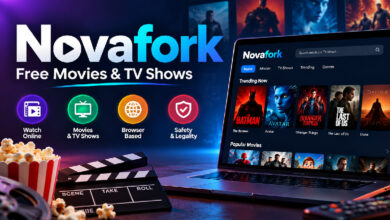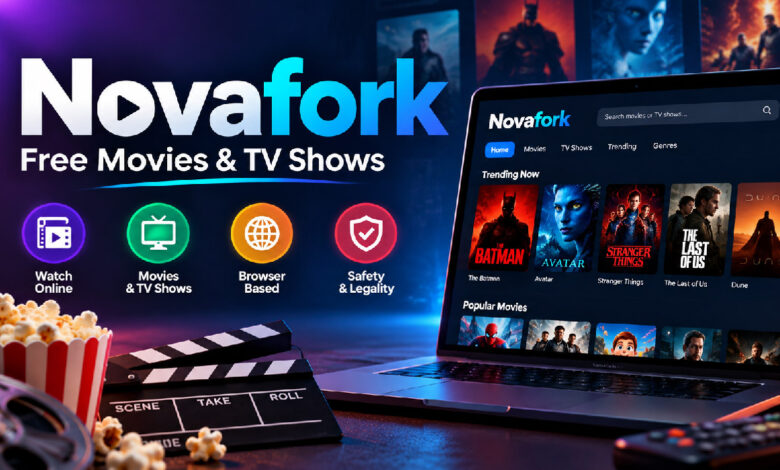
Novafork is a name that has gained attention among people searching for movies and television shows online. It is commonly associated with browser-based streaming, where visitors can explore entertainment content without using the traditional apps offered by major streaming companies.
Interest in Novafork also comes from the uncertainty surrounding the name. Unlike established streaming brands with clearly identified companies, official applications, licensing information, and customer support, the public identity behind different websites using the Novafork name has not always been equally clear.
The technical side makes the topic more interesting. A Novafork-related open-source project has provided clues about how one implementation worked, including connections with external movie information and video sources. However, open-source code does not establish ownership of every similarly named website.
This guide explains Novafork in simple terms, including how this type of streaming interface works, its GitHub connection, possible features, domain uncertainty, privacy concerns, copyright questions, common problems, and safer alternatives. It also explains what users should verify before trusting a Novafork-branded website.
What Is Novafork?
Novafork is primarily associated with websites designed to help visitors browse movies and television programs through a web browser. Instead of operating like a traditional television network, such a platform can function as an interface connecting users with information and external streaming sources.
This distinction is important because the name should not automatically be treated as one verified streaming corporation. Different websites can use similar names, interfaces, or code. Without confirmed ownership information, users cannot safely assume every Novafork-branded domain belongs to the same operator.
One technical clue comes from a public Novafork-related GitHub project. Information associated with the project indicated that it functioned as a streaming front end and relied on external services for parts of its movie information and playback functionality rather than supplying everything independently.
Therefore, the simplest description is that Novafork is a name associated with browser-based entertainment streaming projects. Its exact features, operators, domains, and streaming sources can differ between implementations, making the specific website a user visits more important than the Novafork name alone.
How Does Novafork Work?
A streaming front end works differently from a traditional streaming company that manages its entire content infrastructure. The front end provides the visual experience visitors interact with, including search results, posters, movie pages, descriptions, categories, and buttons used to start playback.
Movie information can come from a separate database service. The Movie Database, commonly called TMDb, provides developers with access to entertainment metadata through its API. Such metadata can include titles, posters, descriptions, release information, cast details, images, and other catalog information.
Video playback can be another separate component. A streaming interface may connect visitors with a third-party video source rather than hosting the requested movie directly. Consequently, the interface can continue working even when an individual playback provider becomes unavailable or stops serving certain content.
This architecture also explains an important limitation. An attractive movie catalog does not prove that the operator owns those movies or possesses distribution licenses. Metadata, website software, hosting, and audiovisual content rights are separate elements that must not be confused with one another.
Main Features Associated With Novafork
The main attraction of Novafork-style platforms is convenient browser access. Visitors may be able to browse entertainment without installing conventional desktop software. Depending on the implementation, the interface can potentially work through modern browsers on computers, smartphones, tablets, and other compatible devices.
Search and discovery are another major part of the experience. A streaming interface can let visitors search for specific movies or television series while displaying useful information such as posters, summaries, release years, ratings, genres, cast members, and related entertainment titles.
Some implementations may also organize content into categories based on popularity, genre, release date, trending status, or other metadata. These functions can make a relatively small web application resemble the polished catalogs offered by much larger commercial entertainment platforms.
However, features should be verified on the exact Novafork site being considered. A feature available in source code, an older deployment, or one domain does not establish that every website carrying the Novafork name currently provides the same functionality, reliability, or security.
Novafork and Its GitHub Connection
GitHub helps explain part of Novafork’s technical history. GitHub allows developers to publish software repositories containing source code, documentation, configuration files, and development history. Public repositories can therefore provide considerably more technical transparency than an ordinary website alone.
A Novafork-related repository has been associated with a streaming front end derived from earlier software. This helps explain how at least one Novafork implementation was designed, but it should not be considered universal documentation for every current website that happens to use the same name.
This matters because GitHub supports forks. A fork allows someone to create a separate copy of a repository and develop it independently. Developers can modify functionality, connect different services, change branding, deploy the project elsewhere, or eventually create something substantially different from the original.
Therefore, matching names are weak evidence of ownership. Finding “Novafork” on GitHub and then seeing “Novafork” in a domain does not by itself establish a relationship. Ownership should instead be evaluated using evidence connected specifically with the website and operator in question.
What an Archived Repository Means
An important part of Novafork’s history is the archived status reported for a known related repository in October 2025. On GitHub, archiving a repository generally indicates that the project is no longer actively maintained and makes that repository read-only unless its owner later changes its status.
The source code does not disappear simply because a repository is archived. People can continue viewing and studying public files. The archived project can therefore remain valuable for understanding previous functionality, architecture, dependencies, and the development history associated with that particular version.
However, an archived repository should not be presented as evidence that every Novafork website has disappeared. Existing deployments may remain accessible, while independent developers may operate forks or modified versions. Other people could also use a similar name without having any relationship with the repository.
The opposite assumption is equally risky. A functioning Novafork-branded website does not demonstrate that the original project returned. Users should distinguish historical source-code evidence from current website ownership rather than treating all projects and domains carrying the name as one service.
Why Novafork Domains Can Be Confusing
Domain identity is particularly important for projects that can be copied or redeployed. A familiar brand name can appear on multiple web addresses, but identical wording, logos, colors, or page layouts do not establish that those domains have the same owners or administrators.
There are many legitimate reasons for web addresses to change. A project can move hosting providers, replace a domain, stop operating, or be redeployed by its developers. Open-source projects introduce another possibility because independent developers can publish modified copies on completely different domains.
There are also less trustworthy possibilities. Someone can imitate a popular name to attract search traffic, distribute unwanted software, display aggressive advertising, collect information, or redirect visitors elsewhere. Familiar branding therefore cannot replace verification of the individual domain being visited.
For Novafork, users should avoid treating an address as “official” unless there is reliable evidence connecting it to an identifiable project or operator. A random post claiming that a particular address is the “new Novafork domain” is not sufficient verification by itself.
Is Novafork Safe to Use?
There is no responsible way to label every Novafork-branded website safe or unsafe as one group when different operators may control different domains. Website security must be assessed at domain level because scripts, advertisements, trackers, downloads, and redirects can vary significantly.
Several behaviors should make users cautious. Unexpected new tabs, fake play buttons, repeated redirects, forced notification requests, suspicious login pages, unknown browser extensions, executable downloads, APK files, and messages claiming that a special video player is required are meaningful warning signs.
Users should be especially suspicious of fake security alerts. A webpage claiming that a device contains viruses and demanding an immediate download should not be trusted simply because the message appears urgent. Browser protection should never be disabled merely to access entertainment content.
Visiting an unfamiliar site also involves privacy considerations. Third-party advertising and analytics technologies can collect information about browsing activity. When ownership and privacy practices are unclear, users should minimize unnecessary data sharing and avoid providing passwords, financial details, or sensitive personal information.
Is Novafork Legal?
Novafork’s legal status cannot responsibly be reduced to a simple universal yes or no. The important issue is whether the operator of a particular streaming service possesses authorization to distribute the movies and television programs that users can access through it.
Copyright holders control important rights relating to films and television programs. A website developer having permission to use open-source software does not automatically receive permission to distribute copyrighted entertainment. Software licensing and audiovisual content licensing are entirely different legal questions.
The same distinction applies to metadata. A website’s ability to retrieve a movie title, poster, description, cast information, or other metadata through an API does not demonstrate that it holds streaming rights for the underlying film or television episode.
Copyright rules and user liability also vary between jurisdictions, so sweeping claims about every visitor would be misleading. When a service does not clearly identify its operator or explain its content licensing, users seeking predictable legal access should favor established licensed streaming and rental services.
Why Free Streaming Requires Extra Care
The word “free” is attractive, but operating a streaming website still creates expenses. Servers, domains, development, maintenance, bandwidth, and other infrastructure can cost money. Users should therefore consider how an unfamiliar free service finances its operation rather than assuming there is no trade-off.
Advertising is one possible business model. Advertising itself is not evidence of wrongdoing; many legitimate websites and licensed streaming services are ad-supported. The concern arises when aggressive third-party advertising creates deceptive buttons, redirects, fake warnings, or other experiences designed to produce accidental clicks.
Users should also question unnecessary account requirements. A streaming page should not demand unrelated device permissions merely to display entertainment. Requests to install unknown extensions, download special executables, provide cryptocurrency, or submit card information without clear commercial terms deserve additional scrutiny.
Convenience should therefore be balanced against transparency. A free interface may appear attractive when it offers immediate browsing, but unclear ownership, uncertain content rights, unstable video sources, aggressive advertising, and weak support can create disadvantages that are not immediately visible.
Common Problems Users May Experience
A common problem with Novafork-style services is a website loading normally while a movie refuses to play. If playback depends on an external provider, that provider can change its system, remove content, block requests, experience downtime, or otherwise become incompatible with the front end.
Users may also encounter missing episodes or endless loading. These problems do not necessarily mean the user’s internet connection is responsible. When catalog information and video delivery come from separate systems, the movie page can remain available even though its associated video source has failed.
Domain disappearance is another source of confusion. If an address stops working, users may search for replacements and encounter several similarly named websites. Choosing the first replacement can be risky because a matching name does not demonstrate continuity with the previous operator.
Pop-ups, redirects, notification prompts, or security warnings require greater caution than ordinary playback errors. Users should avoid suspicious downloads and should not bypass browser warnings casually. When a site behaves aggressively, leaving it is generally safer than repeatedly trying different buttons.
What to Do After Visiting a Suspicious Site
Simply opening an unfamiliar webpage does not mean a device has automatically been compromised. If nothing was downloaded or installed, users can close suspicious tabs, review browser notifications, and check whether the website received permissions they did not intentionally want to grant.
The situation deserves more attention if a file was downloaded. Unknown executables, installers, browser extensions, and mobile application packages should not be opened merely because a streaming page requested them. Removing suspicious downloads and using reputable security software can reduce unnecessary exposure.
Passwords require immediate attention if they were entered into a suspicious login page. Users should change the affected password through the genuine service and avoid reusing the same password elsewhere. Multi-factor authentication provides another useful layer of account protection where available.
Financial information requires similar care. Anyone who submitted card or payment details to a suspicious website should review account activity and contact the relevant financial institution when necessary. The appropriate response depends on what information was actually shared rather than merely visiting a webpage.
Better Alternatives to Novafork
Users who prioritize predictable ownership and licensing can choose established streaming platforms. Netflix, Disney+, Amazon Prime Video, and other licensed subscription services provide official applications, account management systems, published commercial terms, and clearer channels for resolving billing or technical problems.
People who do not want another monthly subscription can consider legal rental or purchase platforms. Depending on the country and title, services such as YouTube or other established digital stores may let users pay only for the movie or program they actually want.
Free does not necessarily mean unauthorized. Legitimate ad-supported streaming services operate in various regions, while broadcasters may provide selected programs through their own websites or applications. Public libraries in some locations also provide members with access to digital entertainment services.
Availability varies substantially by country because distribution rights are territorial. The best alternative is therefore not necessarily one particular company. Users should compare legitimate local services based on catalog availability, price, device support, advertising, video quality, and the content they actually watch.
How to Evaluate a Novafork Website
Start with identity rather than appearance. Look for meaningful information about the operator, contact methods, terms, and privacy practices. A professional-looking homepage is easy to reproduce, while transparent information about the organization responsible for a service provides more useful context.
Next, examine how the website behaves. Ordinary browsing should not produce constant redirects, fake warnings, forced notification requests, or mysterious downloads. Be especially careful when several different “Play” buttons appear and clicking them repeatedly opens unrelated websites instead of the requested content.
Users should also separate technical legitimacy from content legitimacy. Open-source code can be genuine while the way a particular deployment sources copyrighted video remains uncertain. Similarly, authentic entertainment metadata can appear on a website whose streaming rights have not been demonstrated.
Finally, evaluate the exact domain rather than relying on reputation attached to the Novafork name. With projects that can be copied, forked, or redeployed, yesterday’s information about one address may tell users very little about a different website operating today.
Final Thoughts
Novafork is best understood as a name associated with browser-based movie and television streaming projects rather than automatically treating every Novafork-branded website as one verified company. Its open-source history provides useful technical context, but it cannot establish ownership of unrelated deployments.
The archived status associated with a known Novafork repository is also significant. It provides a historical reference while indicating that the particular repository stopped normal active development. It does not independently establish the status, ownership, or authenticity of websites currently carrying the Novafork name.
Users should therefore focus on evidence. Check the exact domain, examine ownership transparency, question unnecessary downloads, reject suspicious permissions, distinguish movie metadata from distribution rights, and remember that matching branding or source-code names do not establish that two online services share an operator.
For people who simply want reliable entertainment, established licensed platforms remain easier to evaluate. Novafork is nevertheless an interesting example of a wider web problem: open code, copied branding, changing domains, third-party services, and uncertain ownership can make online identity surprisingly difficult to verify.
(FAQs)
What is Novafork?
Novafork is a name mainly associated with browser-based movie and TV streaming projects. Its public identity is less clear than major streaming companies, so users should evaluate the exact Novafork domain they encounter rather than relying on the name alone.
Is Novafork free?
Some Novafork streaming implementations have been presented as free to access. However, features and monetization can vary between websites, and users should not assume that every domain carrying the Novafork name follows the same business model.
Is Novafork safe?
Safety depends on the exact website rather than the Novafork name. Users should avoid domains displaying suspicious redirects, fake play buttons, forced notifications, unknown downloads, browser extensions, misleading security alerts, or requests for unnecessary personal and financial information.
Is Novafork legal?
That depends on the licensing arrangements of the specific service and applicable local law. Public source code or movie metadata does not provide streaming rights. Users wanting clear licensing should choose established services authorized to distribute their content.
What happened to the Novafork GitHub project?
A known Novafork-related GitHub repository was reported as archived in October 2025. An archived GitHub repository becomes read-only, generally indicating that normal active maintenance of that particular repository has stopped unless its owner later reverses the archived status.
Does Novafork have an official app?
A currently verified universal official Novafork app should not be assumed merely from the brand name. Users should be particularly cautious with APKs or other downloads claiming to be Novafork applications unless their developer and distribution source can be independently verified.
Why does Novafork sometimes stop working?
A streaming front end can depend on external services for metadata and video playback. If a video provider changes, blocks access, removes content, or experiences downtime, movies can stop playing even when the main website continues loading normally.
What are the best Novafork alternatives?
Established licensed services such as Netflix, Amazon Prime Video, Disney+, legitimate digital rental platforms, broadcaster applications, and legal ad-supported services are alternatives. Availability and catalogs differ by region, so users should compare legitimate options available in their country.